
Cox & Kings had a total debt of Rs 3,238 crore at end of FY19 and this included both short-term and long-term loans.

New regulatory rules, softer freight rates and a liquidity crunch at non-bank lenders are among the reasons.

The Ministry of External Affairs (MEA) on March 17 had announced that State Bank of India (SBI) would extend a term loan of $1 billion to Sri Lanka, fully guaranteed by the Indian government, and this was part of India's financial aid to the troubled island nation. Ministry of External Affairs (MEA) spokesperson Arindam Bagchi was quoted saying by news agency PTI that the loan would be used for importing food, medicines, and other essential items. "India has always stood with the people of Sri Lanka and we will continue to extend all possible support at this juncture.

Where do Vijay and his TVK expect to get their votes from? Vijay has a huge fan following among women, but will they automatically become his voters like they had done for MGR's AIADMK, asks N Sathiya Moorthy.

An improvement in political relations, anchored in a restoration of peace and tranquillity at the border, could open up opportunities for expanded economic and commercial relations between them, suggests former foreign secretary Ambassador Shyam Saran.

Banks argued that loans of most lenders are funded primarily by retail deposits and not from the wholesale market as was the practice abroad


Municipal corporations penalise late property tax payments. 'Penalties can include attachment of properties, bank accounts, rent and other movable assets," says Anand Moorthy, co-founder, Square Yards.

'Since there is no photo-op, or quick fix solutions, politicians do not want to address climate change. It is very unfashionable.'

Corporate India is starting to step up its capital expenditure plans amid government incentives and signs of rising demand, company executives and analysts have indicated. This coincides with the Reserve Bank of India (RBI) recently citing a double-digit growth in private capital expenditure. Healthy balance sheets of banks and corporates, along with increasing capacity utilisation and improving business sentiment, are contributing to a favourable environment for sustained growth in private sector investments, the RBI said in its policy last week.

Carnival group buys project in Chandigarh from L&T for Rs 1,785 cr.

A host of lenders, including State Bank of India, IDBI Bank, Indian Bank and Andhra Bank, have lined up meetings of their asset-liability committees this week, to review their lending and deposit rates.

Foreign banks were ahead in terms of technology, but that is no longer the case as Indian private banks steal the innovation march.

These schemes are a good choice for investors contemplating a large investment in equity funds. Instead of investing all the money in one go, they can do so in a staggered manner by parking it in these schemes and then transferring it to equity mutual funds through a systematic transfer plan.

While it is okay to hunt for banks that offer higher rates, the safety aspect is equally important.
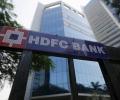
The country's largest private sector lender HDFC Bank on Saturday reported a 23 per cent jump in standalone net profit to Rs 10,055.20 crore for the March quarter, led by growth in loan demand across categories and lower provisioning as bad loans were trimmed. The bank's net profit during the corresponding period of the previous fiscal stood at Rs 8,186.51 crore. "After providing Rs 2,989.5 crore for taxation, the bank earned a net profit of Rs 10,055.20 crore, an increase of 22.8 per cent over the quarter ended March 31, 2021," HDFC Bank said in a regulatory filing.

The IPO-bound national insurer LIC is not only the largest holder of government debt -- owning 19 per cent of the G-secs -- but also the single largest owner of equities, the largest fund manger as well as holder of household savings, dwarfing even SBI deposits, as per a report. Holding 17 per cent of the over Rs 80.7 lakh crore dated government securities, maturing by 2061, the Reserve Bank is the second largest holder of government debt, while led by public sector banks, commercial banks collectively own around 40 percent. Other insurers cumulatively own only 5 per cent.
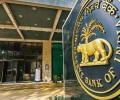
The proposed Central Bank Digital Currency (CBDC) to be issued by the Reserve Bank will play a critical role in improving the speed of transactions and reducing the cost of cash, a Deloitte report said on Wednesday. The Reserve Bank of India is planning to come out with a central bank-backed digital currency, using blockchain technology in 2022-23. As a financial services innovation, CBDCs are likely to play a pivotal role in shaping the 'future of value transfer', the report said, adding that most central banks worldwide are now in various stages of their evaluation of launching their national digital currencies.
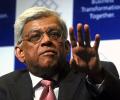
He said trust and confidence were the backbone of any financial system and one should never underestimate the power of ethics and values.

There are about 5.7 crore small entrepreneurs.

One of the alleged lashkar-e-Tayiba trainers involved in the 2008 Mumbai terror attacks used to frequently get money transfers into his account, two Pakistani bank executives told an anti-terrorism court on Wednesday.

'The funds were arranged from multiple banks at a very competitive rate and converted into dollars at the best rates.'

India, the bank's second biggest shareholder after China, is looking to borrow from the AIIB.

In the June quarter of FY24, 51 per cent of consumers who took small-ticket personal loans already had more than four credit products at the time of accessing yet another new loan, compared with just 17 per cent in the June quarter of FY20, points out Tamal Bandyopadhyay.

Commercial banks have not yet reduced their lending rates.
Top ten defaulters, including Daewoo Motors and Malvika Steel Ltd, owe scheduled commercial banks Rs 3908.96 crore (Rs 39.09 billion), Finance Minister P Chidambaram said in New Delhi.

Morgan Stanley removed banking stocks from its model portfolio when it slashed its weighting on the sector by 500 basis points. Several foreign brokerages, such as UBS, JP Morgan, and Credit Suisse, of late, have also become less optimistic about banking stocks.

Letter to corporate affairs ministry cites slowing economy, capital challenges.

'I have a problem with the term 'outsider'. 'Doctor ka beta doctor banta hain, par aap baki doctors ko outsider nahi na bulate.' 'I always wanted to be an actor, yaar.' 'While I was in the bank for eight years, I was training to be an actor in Delhi.'

Food inflation in April stood at 6.08 per cent, while the overall WPI inflation fell to a three-year low of 4.89 per cent.

India has a unique window of opportunity to effectuate long-lasting structural change in its banking sector, says Riju Agrawal.

'The Insolvency and Bankruptcy Code is neither beneficial to banks nor helpful for the borrower.' 'Genuine people who are caught in economic stagnation will lose everything and thousands will lose jobs.'

Most adult Indians should have access to bank deposits, credit and remittance facilities as well as insurance and mutual fund products in the next decade, and technology will play a big role in this transformation, says Tamal Bandyopadhyay.

'By not letting bankrupt banks fail, we have discouraged ordinary folk from taking precautions while choosing their bank or at least when they hear bad news about their bank,'says S Muralidharan, former MD, BNP Paribas.
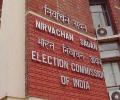
From steel tycoon Lakshmi Mittal to billionaire Sunil Bharti Mittal's Airtel, Anil Agarwal's Vedanta, ITC, Mahindra and Mahindra, and a lesser-known Future Gaming and Hotel Services were among the prominent buyers of the now-scrapped electoral bonds for making political donations.

'Public sector banks are like an extended arm of the government.' 'They rush to rescue certain sectors or they rush to invest in certain sectors to prop up the economy which the private banks don't.'

In an interview with Malvika Joshi and Somasroy Chakraborty, Madan Menon, RBS' chief executive for Singapore and Southeast Asia and head of global banking and markets in India, shares the bank's plans.

Banks are in need of government support to manage the stressed assets
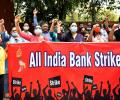
The government can also individually exempt the PSBs, that are to be privatisated from the two Bank Nationalisation Acts. This will bring such lenders under Banking Regulation Act, and make them companies, reports Nikunj Ohri.
 © 2026 Rediff.com - Advertise with us - Disclaimer - Privacy Policy - Sitemap - Feedback - About us - Terms of use - Grievances